
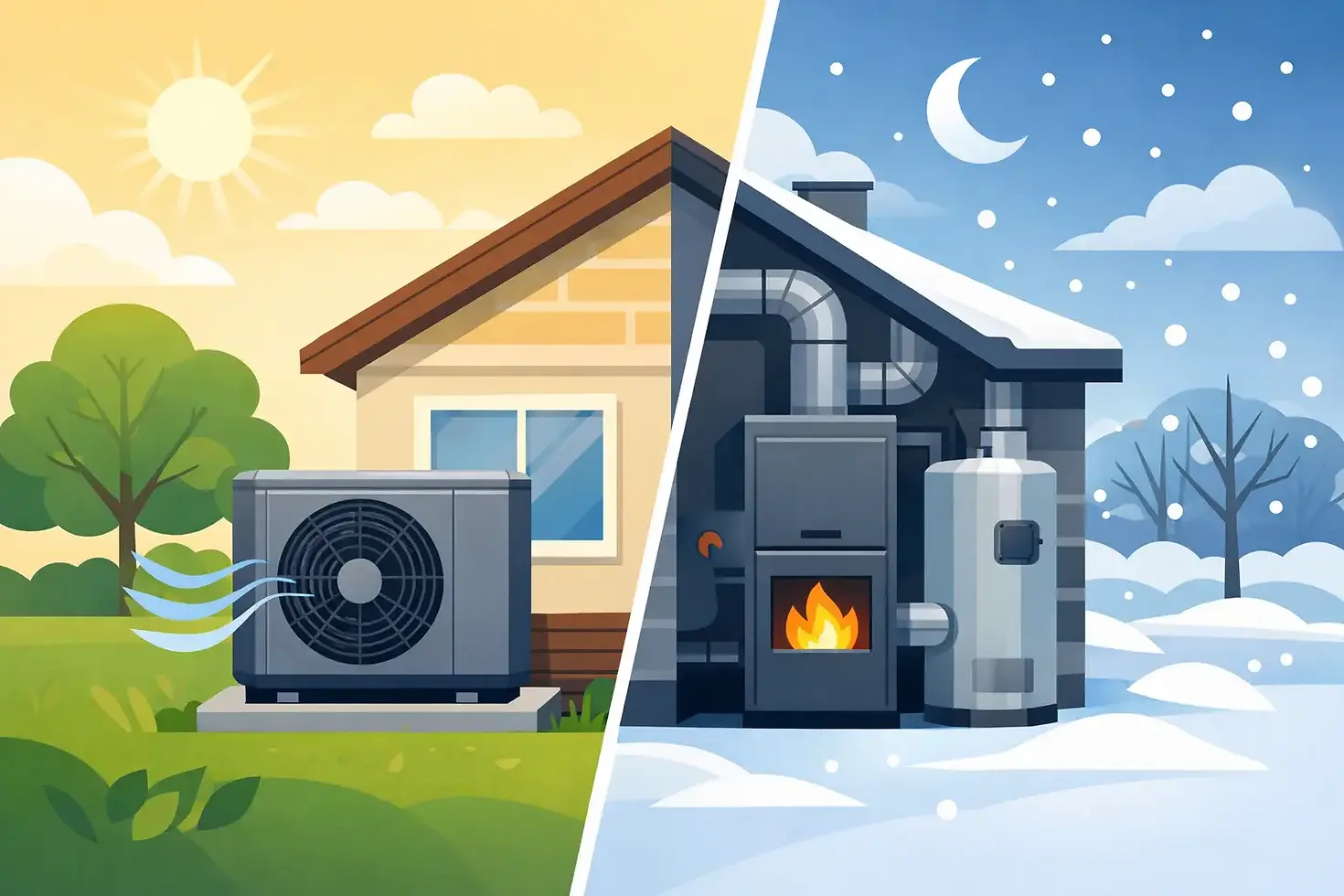
Heat Pump vs Furnace: Best Choice for KC Homes
A heating system decision in Johnson County is not just about staying warm on the coldest night of the year. It affects your monthly utility costs, summer comfort, repair budget, and how reliably your home responds when Kansas weather changes fast. When comparing a heat pump vs furnace, the right answer depends on your home, your existing equipment, fuel access, and what you value most.
A furnace remains a strong, dependable option for many local homes, especially when natural gas is already available. A modern heat pump can provide highly efficient heating and cooling from one system, making it an appealing choice for homeowners planning a larger upgrade. Neither option is automatically better. The goal is to choose equipment that fits your household instead of paying for features you may not need.
Heat Pump vs Furnace: The Basic Difference
A gas furnace creates heat by burning natural gas. It sends that heat through your ductwork and raises the indoor temperature quickly. An electric furnace creates heat with electric resistance elements, though gas furnaces are more common in many Johnson County neighborhoods.
A heat pump does not create heat in the same way. It moves heat from outside air into your home during winter. In summer, it reverses direction and moves indoor heat outside, operating much like a central air conditioner.
That difference matters because moving heat generally requires less energy than generating it. Under the right outdoor conditions, a heat pump can deliver more heating energy than the electricity it uses. As temperatures drop, however, a standard air-source heat pump becomes less efficient and may need supplemental heat to keep up.
How Each System Handles Kansas Winters
Johnson County winters can be mild one week and sharply cold the next. That makes cold-weather performance a practical part of the decision, not a technical footnote.
A properly sized gas furnace provides steady, high-temperature heat even when outdoor temperatures fall well below freezing. It is built for the cold snaps that arrive with little warning, and it can warm a chilly house quickly. For homeowners who want the strongest possible heating output during severe weather, a furnace offers peace of mind.
Today’s cold-climate heat pumps perform far better in low temperatures than older models. Many can heat effectively below freezing, but their capacity and efficiency decline as the outdoor temperature falls. During the coldest stretches, the system may rely on electric heat strips or a backup furnace. Electric backup heat works, but it can be expensive to run.
For many Kansas homes, a dual-fuel setup is worth considering. This pairs an electric heat pump with a gas furnace. The heat pump handles efficient heating during moderate weather and provides air conditioning in summer. When temperatures reach a pre-set point, the furnace takes over. It is a tailored solution that can balance efficiency, comfort, and cold-weather reliability.
Upfront Cost and Long-Term Operating Costs
Installation cost is only one part of the picture. Equipment efficiency, local utility rates, ductwork condition, electrical capacity, and available incentives all affect the real cost of ownership.
Replacing an existing gas furnace with another gas furnace is often the more straightforward installation when the home already has gas service, a compatible venting path, and working ductwork. If your air conditioner is also aging, replacing the furnace and AC together may improve performance and avoid mismatched equipment.
A heat pump can cost more upfront than a comparable furnace because it also replaces the cooling side of the system. That cost can make sense when both your furnace and air conditioner are near the end of their service life. Instead of installing two separate systems, you may be able to install one heat pump system with appropriate backup heat.
Monthly operating costs are not identical from home to home. A high-efficiency heat pump can reduce energy use in mild weather, while a high-efficiency gas furnace may remain cost-effective when natural gas prices are favorable. The only honest way to estimate savings is to consider your utility bills, insulation levels, home size, equipment efficiency, and how you use the thermostat.
Be cautious with blanket promises about savings. A system that looks efficient on paper can disappoint if it is oversized, undersized, poorly installed, or connected to leaky ductwork.
Comfort Is About More Than the Thermostat Setting
Furnaces and heat pumps create a different feel inside the home. A gas furnace usually delivers hotter air from the vents and runs in shorter, more noticeable cycles. Many homeowners like the quick recovery when doors open frequently or temperatures drop overnight.
A heat pump typically supplies air at a lower temperature than a furnace, though it can still keep the home comfortable. It often runs longer, gentler cycles. This can help maintain more even temperatures from room to room, especially when the system is properly sized and airflow is balanced.
The condition of your home plays a major role. Drafty windows, attic insulation gaps, poorly sealed ducts, and rooms with weak airflow can make any heating system feel inadequate. Before recommending replacement, a service-first contractor should look for repairable issues that may be affecting comfort. Sometimes a thermostat adjustment, duct repair, maintenance visit, or targeted airflow improvement solves the concern without requiring a new system.
Humidity and Indoor Air Quality
Winter air in Kansas can feel dry, particularly with a furnace running regularly. A furnace does not inherently remove humidity, but it can make dry indoor air more noticeable because it heats quickly. A whole-home humidifier may help families dealing with dry skin, static electricity, or irritated throats.
Heat pumps also benefit from good humidity management and proper airflow. If indoor air quality is a concern, consider the full comfort system: filtration, duct condition, ventilation, humidification, and equipment maintenance. Heating equipment is only one piece of a healthy, comfortable home.
Maintenance, Repairs, and Expected Life
Both options need professional maintenance. A furnace should be inspected before heating season to check burners, heat exchangers, safety controls, venting, and airflow. A heat pump needs heating and cooling maintenance because it works year-round. Its outdoor unit, refrigerant levels, electrical components, coils, and defrost controls all need attention.
A gas furnace commonly lasts around 15 to 20 years with good maintenance, although usage, installation quality, and repair history matter. Heat pumps often last roughly 10 to 15 years because they operate through every season. Those are general ranges, not replacement deadlines.
If your current equipment is acting up, repair versus replacement should be based on more than age. Consider the cost and frequency of repairs, energy performance, safety concerns, available parts, and whether the system still meets your comfort needs. A repair-first evaluation protects you from replacing equipment before it is necessary while still being honest when a replacement is the more practical long-term choice.
When a Furnace Is Usually the Better Fit
A furnace may be the better choice if you have reliable natural gas service, want powerful heat during extreme cold, and only need to replace heating equipment while your air conditioner still has useful life left. It can also be a practical fit for homeowners who prefer a familiar system and want the lowest complexity for a like-for-like replacement.
A high-efficiency furnace can be an excellent upgrade from an older unit. Proper installation matters just as much as the efficiency rating. Correct sizing, safe venting, combustion testing, and duct airflow all influence how well it performs.
When a Heat Pump Is Usually the Better Fit
A heat pump deserves serious consideration when both your furnace and air conditioner are aging, when you want one system for heating and cooling, or when reducing electricity use during milder weather is a priority. It can also be a strong option for all-electric homes or homeowners interested in pairing modern equipment with future energy upgrades.
If winter reliability is a concern, ask about a cold-climate model or a dual-fuel design. The best option is not always the system with the highest rating. It is the one sized for your home and configured for the temperatures, utility costs, and comfort expectations you actually have.
Get a Recommendation Based on Your Home
The best starting point is a professional assessment, not a sales pitch. A qualified technician should review the age and condition of your current system, inspect ductwork, discuss hot and cold rooms, evaluate insulation concerns, and calculate the heating load instead of guessing based on square footage alone.
At Cozy Home Solutions, that means looking for the most sensible path first, whether it is a repair, maintenance improvement, furnace replacement, heat pump installation, or a dual-fuel system. A clear estimate and straightforward explanation give you the information to make a confident choice.
Your home should feel comfortable when the forecast turns, not leave you wondering whether the system will keep up. Start with the condition of the equipment you have, ask questions about the options that fit your budget, and choose a solution designed for your home rather than someone else’s.


Comments